Click HERE to engage with AFIS on Linkedin
"How Government policy simultaneously relies on independent schools to deliver social mobility while making it harder for them and the families that fund them, to survive."
The Government’s approach to independent schools is marked by striking contradictions. On the one hand, it has adopted an increasingly hostile policy stance, imposing VAT on school fees and removing business rates relief, while simultaneously claiming to be “comfortable promoting the excellence of our independent schools and universities internationally.”
An equally telling inconsistency lies within the Department for Education itself. Through a scheme specifically designed to support vulnerable children, the Department actively places care-experienced pupils in independent boarding and day schools, explicitly recognising their value as environments of high-quality education, strong pastoral support and stable care.
That contradiction speaks volumes. If independent schools were not delivering exceptional outcomes, in education, wellbeing and life chances, why would the Department endorse them for some of the country’s most vulnerable children?
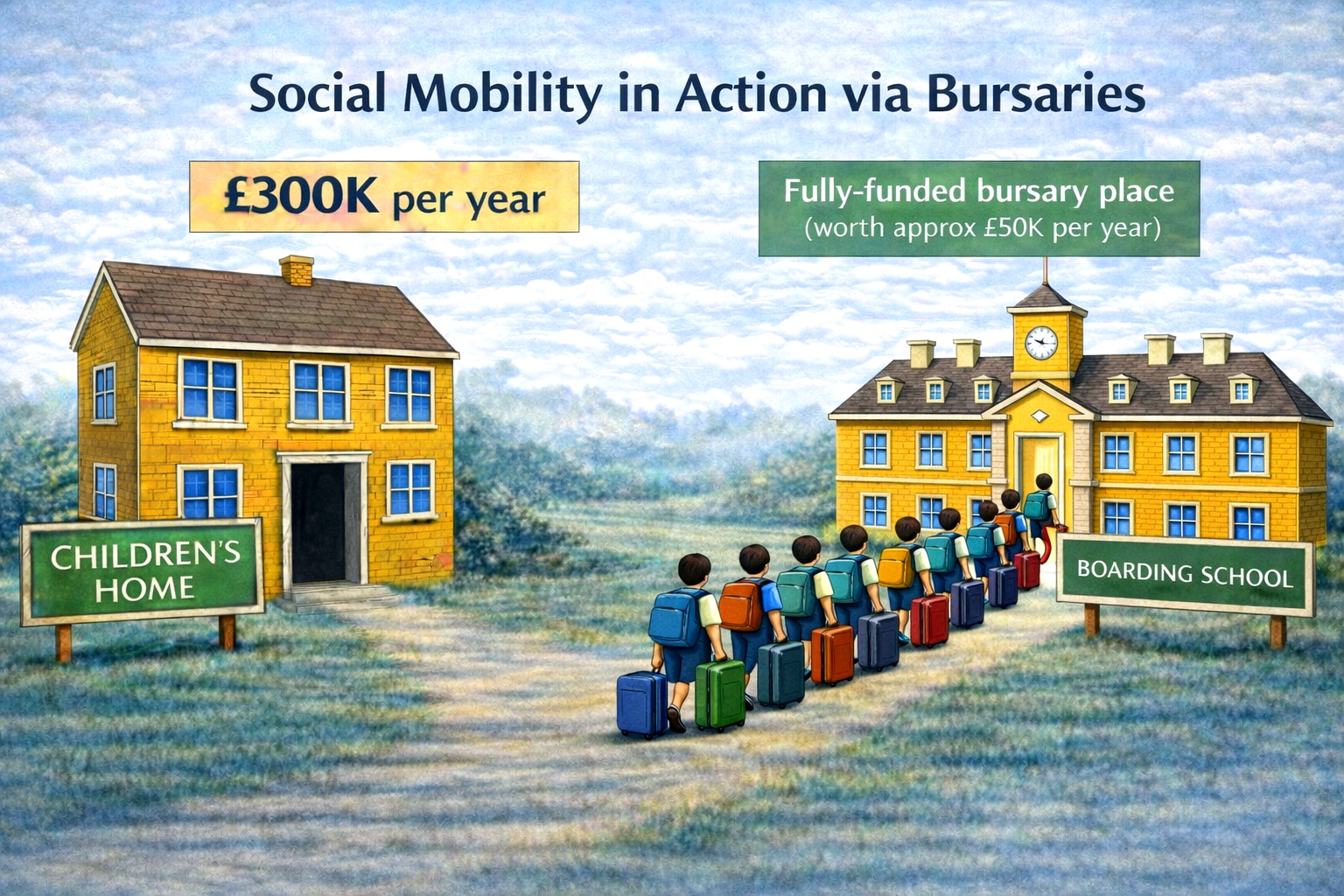
Through its Broadening Educational Pathways scheme, care-experienced young people, including those living in children’s homes, are given the opportunity to attend outstanding independent day and boarding schools. The schools fund these places themselves through bursaries, often covering more than 100 per cent of fees. The Department funds only the programme’s infrastructure, brokerage and support, not the tuition itself.
Crucially, the scheme allows independent school places to be considered by local authorities as part of the package of care and education options available for children with experience of the care system.
That is telling.
It suggests that, for some of our most vulnerable young people, the DfE recognises that mainstream state provision is not always suitable, and that independent schooling is more likely to deliver better outcomes.
Independent schools to the rescue. Thank goodness this choice and opportunity exists.
This scheme is excellent. It leverages independent schools’ established commitment to means-tested bursaries and social mobility, funding places for vulnerable children
To put this into context, Independent Schools Council data shows that independent schools provided £547 million in means-tested bursary funding last year alone.
Much of this support is underpinned by philanthropic donations from alumni and parents, alongside funding drawn from schools ’ budgets (budgets which themselves are largely generated by the fees paid by those same parents).
Since 2020, the Broadening Educational Pathways scheme has supported more than 280 young people from over 80 local authorities to secure a new boarding or independent school place.
Many of these placements will also be saving local authorities and the state up to £311k per child per year compared with alternative care and education arrangements.
This is social mobility in action and, by any reasonable estimate, will likely deliver well over £200 million in bursaries.
As one local authority social worker puts it: “ recognise this service is one of many options that can promote stability for children in and on the edge of care and provide excellent outcomes whilst being good value for money.”
And yet, I’ struck by the irony that these very independent schools and bursaries are, in large part, funded by the parents who are now being asked to pay VAT on school fees, on top of the general taxation they already pay for state school places their children do not use.
Those same parents are:
· Paying school fees that are widely estimated to save the state around £4.5 billion a year in the cost of educating their children in state schools.
· Helping fund, directly and indirectly, well over £200 million in bursaries supporting children from families who could not otherwise afford independent education — including many care-experienced young people.
Taken together, parents and independent schools are saving the Government well in excess of £4.7 billion, while simultaneously expanding opportunity, reducing pressure on state education, and improving opportunities and life chances
Here is a tightened and more fluent version of your chosen paragraph, with the rhetorical rhythm strengthened and the final line given more weight:
And of course, this is about far more than money; it cannot be measured in pounds and pence. How do you quantify the value of taking a child out of instability and disadvantage and placing them in a safe, structured and nurturing independent boarding school community; one that offers safety, belonging, aspiration, consistency, outstanding education, enrichment, and long-term stability?
The impact on those children, and the value to society, is immeasurable.
How can you expect a sector to continue helping solve problems at scale while simultaneously making it harder for that sector, and the families that fund it, to remain financially viable, as parents are forced to withdraw children from the independent schools they know and love, schools are forced to cut staff and other costs, reduce bursary funding, and some are even forced to close?