𝗧𝗵𝗲 𝗗𝗲𝗽𝗮𝗿𝘁𝗺𝗲𝗻𝘁 𝗳𝗼𝗿 𝗘𝗱𝘂𝗰𝗮𝘁𝗶𝗼𝗻 𝗵𝗮𝘀 𝗻𝗼𝘄 𝗰𝗼𝗻𝗳𝗶𝗿𝗺𝗲𝗱 𝘁𝗼 𝗔𝗙𝗜𝗦 𝘁𝗵𝗮𝘁 𝗽𝗼𝘀𝘁-𝟭𝟲 𝗽𝗹𝗮𝗰𝗲 𝗽𝗹𝗮𝗻𝗻𝗶𝗻𝗴 𝗲𝘀𝘁𝗶𝗺𝗮𝘁𝗲𝘀 𝗮𝗿𝗲 𝗻𝗼𝘁 𝗰𝗲𝗻𝘁𝗿𝗮𝗹𝗹𝘆 𝗰𝗮𝗹𝗰𝘂𝗹𝗮𝘁𝗲𝗱.
The Association For Families Of Independent Schooling (AFIS) C.I.C. continues to raise concerns with DfE about emerging capacity pressures, oversubscription and transition uncertainty affecting children and families, following the imposition of VAT on fees and the removal of business rates relief from charitable schools.
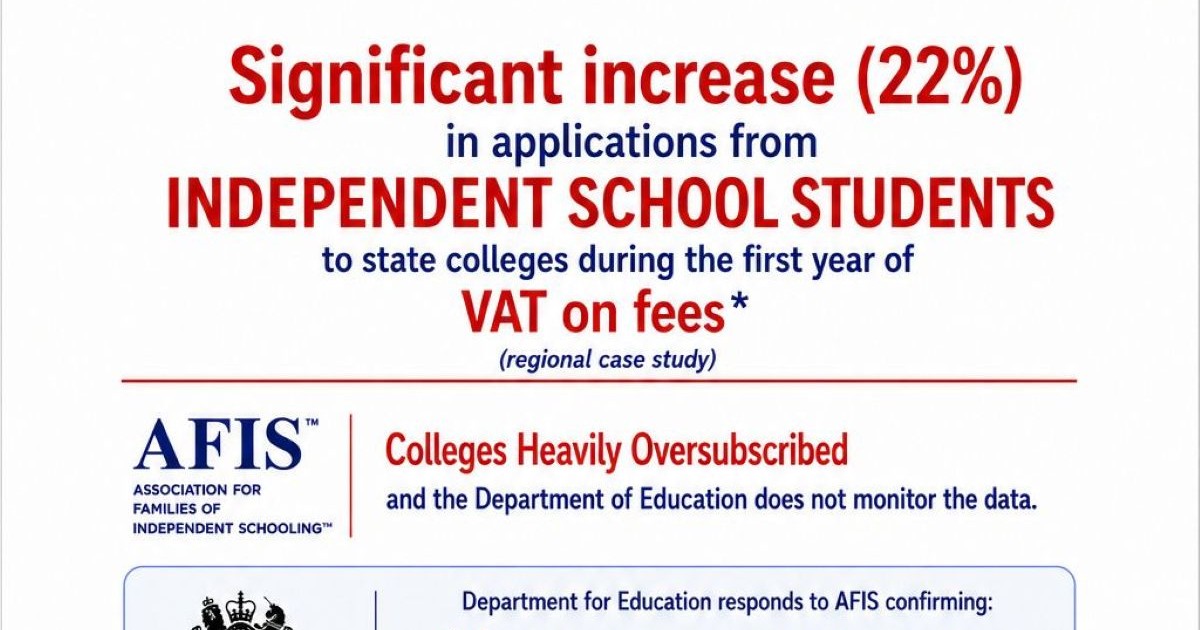
Following an AFIS investigation into post-GCSE capacity pressures, the Department has now confirmed to us that post-16 place planning estimates are not centrally calculated, after 𝘼𝙁𝙄𝙎 𝙦𝙪𝙚𝙨𝙩𝙞𝙤𝙣𝙚𝙙 𝙝𝙤𝙬 𝙩𝙝𝙚𝙞𝙧 “𝙣𝙤 𝙘𝙖𝙥𝙖𝙘𝙞𝙩𝙮 𝙥𝙧𝙚𝙨𝙨𝙪𝙧𝙚” 𝙘𝙡𝙖𝙞𝙢𝙨 𝙬𝙚𝙧𝙚 𝙗𝙚𝙞𝙣𝙜 𝙚𝙫𝙞𝙙𝙚𝙣𝙘𝙚𝙙.
This follows several months during which AFIS members have reported to us about:
• increased competition for places
• oversubscription
• long waiting lists
• and growing uncertainty, around sixth-form transitions in particular.
An FOI response from Farnborough College in Surrey identified a 22% increase in applications from independent-school students during the first year of VAT on school fees.
The same study also highlighted significant oversubscription pressures, with 𝟴𝟵.𝟯% 𝙤𝙛 𝙬𝙖𝙞𝙩𝙡𝙞𝙨𝙩𝙚𝙙 𝙨𝙩𝙪𝙙𝙚𝙣𝙩𝙨 𝙪𝙡𝙩𝙞𝙢𝙖𝙩𝙚𝙡𝙮 𝙣𝙤𝙩 𝙚𝙣𝙧𝙤𝙡𝙡𝙚𝙙.
Sadly, the closure of 70+ independent schools following the introduction of VAT, alongside growing affordability pressures on families, is creating wide disruption across the education landscape, displacing thousands of pupils, disrupting children's education and placing additional pressure on already stretched state provision.
It seems the government introduced major fiscal and education policy changes that were bound to impact hundreds of thousands of children, without establishing a coherent framework for tracking displacement, admissions pressures and wider educational disruption.
We were surprised to discover there is currently no comprehensive national dataset publicly tracking:
• movement from independent to state provision
• regional admissions pressures
• oversubscription trends
• or wider educational disruption linked to these policy changes.
AFIS continues to gather evidence and lived experiences from families across both the independent and state sectors.
We would welcome hearing more from:
• parents navigating waiting lists or transition uncertainty
• school or college staff observing changes in admissions and resources pressures.
Educational systems do not operate in isolation.
Policies affecting one part of the system have consequences across the wider landscape for schools, colleges, communities, children and families alike.
These are questions that deserve serious national attention, and much better national data.
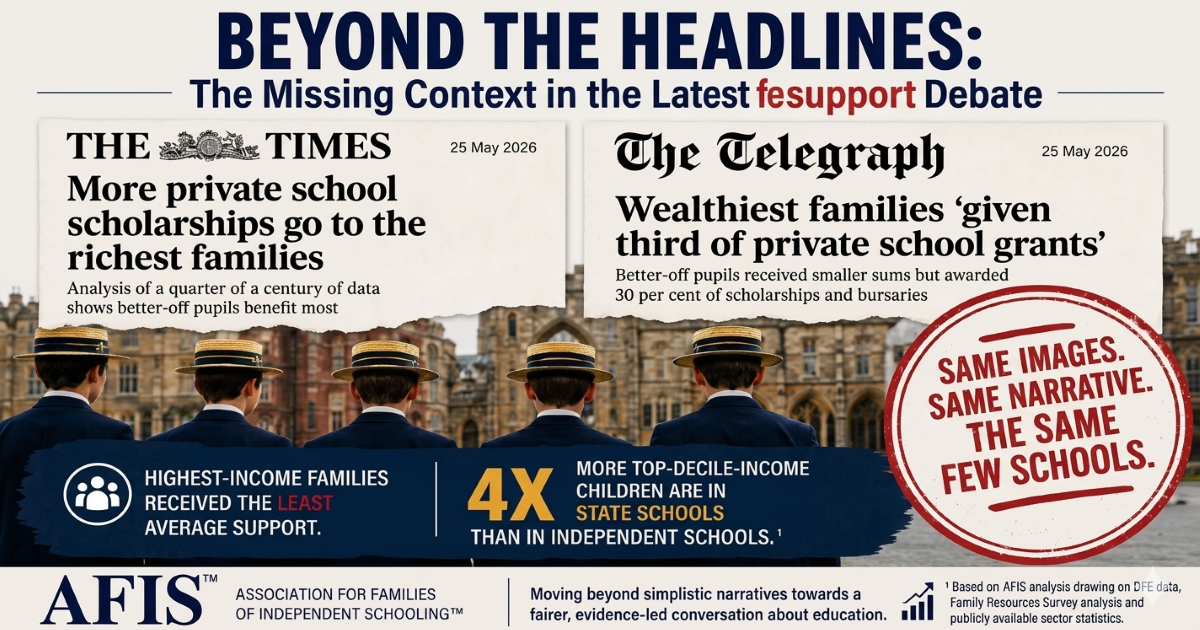
AFIS releases new data that challenges Government claims re impact of VAT
AFIS™
If you support parental choice in education and value the work of the Association for Families of Independent Schooling, please consider:
- Helping to recruit new members through your own networks
- Volunteering to work with us, even just for a couple of hours a month
- Becoming an official AFIS Ambassador
- Making a donation
Get in touch with our team: hello@afis.org.uk and get involved
Related Articles


AFIS is a non-profit organisation dedicated to championing parental choice, securing fairer representation for independent-schooling families, supporting members with benefits and resources, and widening access to independent education.
AFIS and Association for Families of Independent Schooling are registered trademarks of AFIS UK LTD.
The Association for Families of Independent Schooling (AFIS) C.I.C. is a community interest company, incorporated in England and Wales, company number 16817786.