Peter Hogan, AFIS Director and Chair, and a highly experienced Headteacher for both the State and Independent Sectors, reflects on misconceptions, and the importance on understanding education in the present day.
On the day after the last A Level exam three new soft top sports cars drew up outside our school. The drivers, now my ex-pupils, told me the cars were gifts from parents to celebrate the end of school life. A festival on the South coast was beckoning as other leavers arrived to join them. The cars filled with smiling, healthy and excited young adults. Russell Group universities were the destinations for every one of them in the Autumn.
A TikTok clip might caption this as a distillation of everything obnoxious about the privilege of the independent school system.
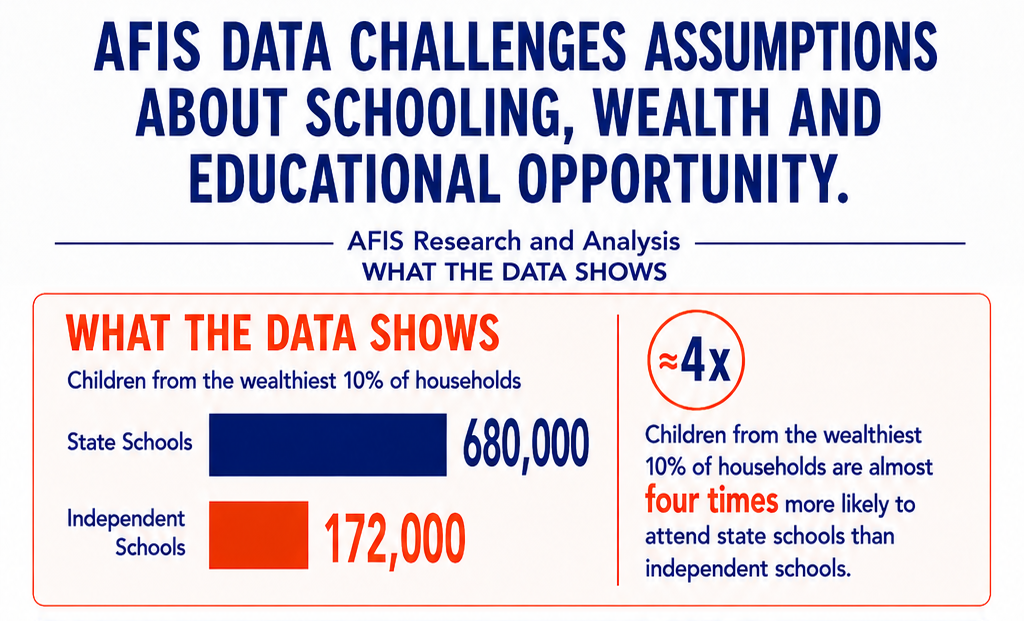
Only this is a state school. They are state school kids. Their education was free yet these young people were privileged by any measure. New research by AFIS shows that the number of affluent wealthy children in state schools actually exceeds the entire independent school population*.
In and after university nobody will label them as part of some public school elite. They can enrol in any club claiming to represent the 93% who don’t attend fee paying schools but have they really come from any form of level playing field?
School populations match the demographics of their catchment area. Richer families buy more expensive properties and these areas are likely to have schools where better results and greater oportunitues are the norm. House prices become a financial barrier to entering a better school. These schools are not really "free" for anyone to enter.
Isn’t it time for a sensible, informed conversation about what advantage and wealth actually looks like and stop painting everything in only state and private colours?
*"Affluent" as defined as the 10 % of income earners. There are 680,000 pupils in this group in the state sector. The entire independent school population is 583,000.

Opinion
A reflection on educational affluence
Peter Hogan
If you support parental choice in education and value the work of the Association for Families of Independent Schooling, please consider:
- Helping to recruit new members through your own networks
- Volunteering to work with us, even just for a couple of hours a month
- Becoming an official AFIS Ambassador
- Making a donation
Get in touch with our team: hello@afis.org.uk and get involved
Related Articles

AFIS is a non-profit organisation dedicated to championing parental choice, securing fairer representation for independent-schooling families, supporting members with benefits and resources, and widening access to independent education.
AFIS and Association for Families of Independent Schooling are registered trademarks of AFIS UK LTD.
The Association for Families of Independent Schooling (AFIS) C.I.C. is a community interest company, incorporated in England and Wales, company number 16817786.