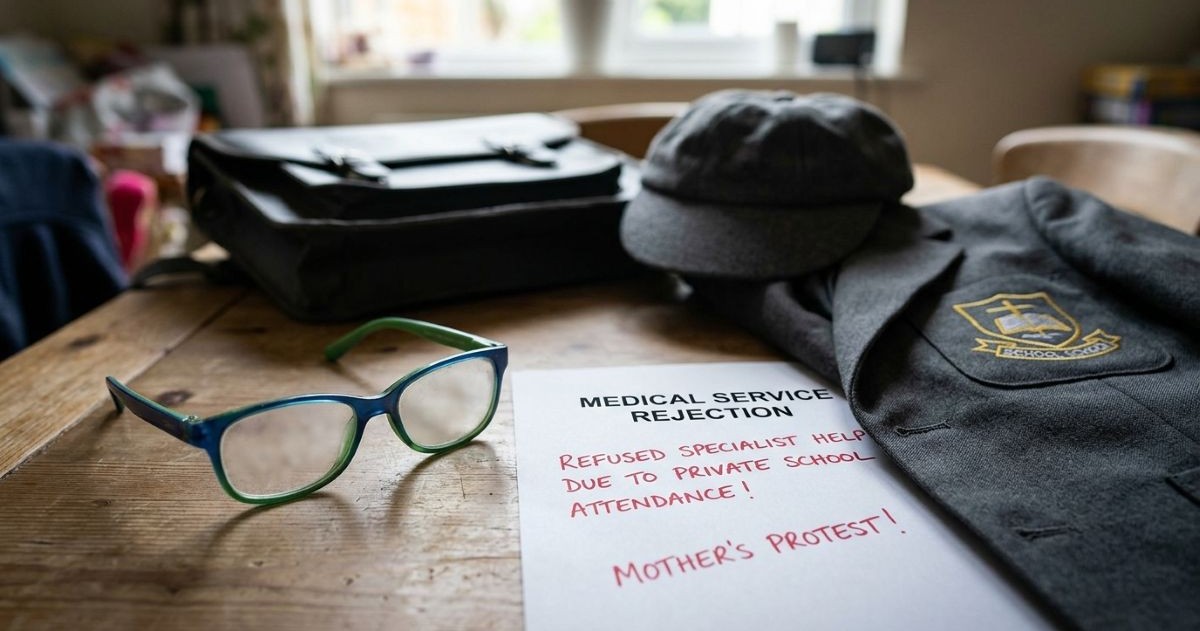
A significant debate regarding educational equity has emerged following the case of Rowan Antolovi, a seven-year-old boy from Dundee whose family is challenging local authority policies after being denied specialist support.
Background and Diagnosis
Rowan Antolovi suffers from a rare, genetic eye disorder that is causing his vision to deteriorate. The condition is hereditary; Rowan’s father was diagnosed with the same disorder later in life, a delay that led to significant financial hardship for the family’s farm. To ensure Rowan has the best possible start, his parents enrolled him in a local private school where smaller class sizes could better accommodate his needs.
The Request for Specialist Help
As Rowan’s sight began to fail, his NHS consultants issued an urgent referral for a Qualified Teacher of Children and Young People with Vision Impairment (QTVI). These specialists provide essential classroom support, such as teaching Braille and advising on the use of assistive technology, which is critical for children with progressive sight loss.
Policy and Dispute
Despite the medical referral, Dundee City Council has reportedly refused to provide the specialist teacher. The council cited a policy stating that they do not provide such services to pupils attending fee-paying schools, arguing that independent institutions are responsible for meeting the additional support needs of their own students.
The Osborne family, however, argues that this constitutes discrimination. They contend that because the specialist support is a directed medical and educational necessity—and because they continue to pay taxes that fund these services—their son should not be excluded based on his school choice.
The Wider Conversation
This case highlights a growing tension in the UK educational landscape:
- The "Two-Tier" Debate: Critics of the council's decision argue that specialist disability support should be "child-bound" rather than "school-bound," ensuring that a child’s disability is supported regardless of where they are educated.
- Institutional Responsibility: Conversely, local authorities often point to limited budgets and the legal obligation of independent schools to provide for their pupils under the Equality Act.
For families like the Osbornes, the situation remains a race against time as Rowan’s vision continues to decline. The family continues to advocate for a policy change that would ensure children with sensory impairments receive the specialist intervention they require, irrespective of their educational setting.
For more information on advocating for parental choice and supporting families in independent education, join AFIS today.